Colorful Floral Garden
First Impressions: A Breath of Spring in Stitch Form
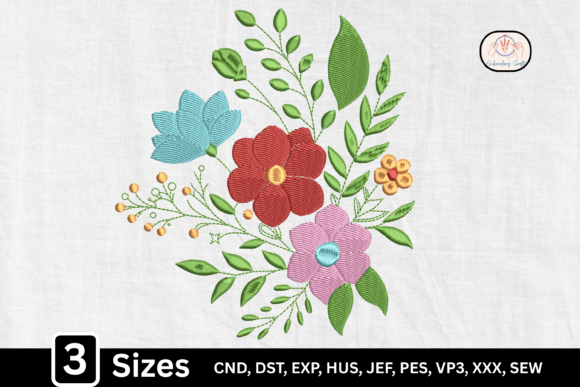
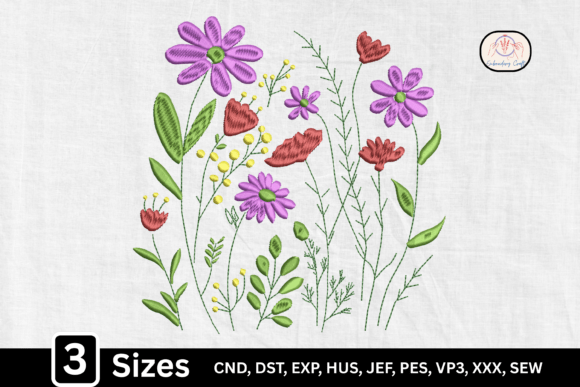
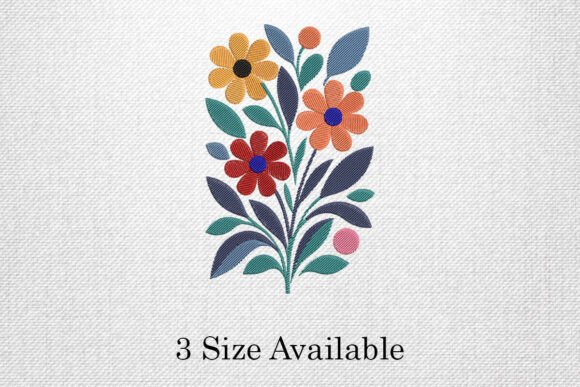
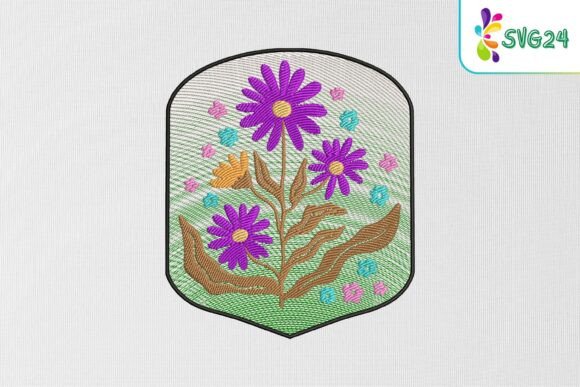
When I opened Colorful Floral Garden for the first time, I didn’t just see a bouquet—I felt a mood shift. The arrangement isn’t tightly symmetrical or overly formal; it’s a relaxed, organic tangle of blooms in purple, yellow, and blue, cradled by slender green leaves. There’s movement here—not frantic, but breezy, like petals catching a soft breeze. As a designer who’s stitched hundreds of floral motifs, I immediately sensed its strength: it reads clearly at medium scale (3–4 inches wide), holds visual interest without crowding, and carries that rare balance—detailed enough to feel handmade, simple enough to stitch reliably.
A Real-World Test: Embroidering It on a Linen Tote Bag
Last week, I used Colorful Floral Garden on a natural linen tote for a local boutique’s spring launch. No mockup, no filter—just me, my machine, tear-away stabilizer, and a 5" hoop. The design stitched cleanly across the slightly nubby fabric surface. The satin stitches on the larger petals held their shape, and the fill stitches in the centers had just enough texture to avoid looking flat. Customers loved how “alive” it felt—not stiff or digitized, but like a garden pressed gently into cloth. That reaction tells me Colorful Floral Garden works especially well for boutique merchandise, personalized gifts, and small shop products where authenticity matters more than perfection.
Where It Shines—and Where It Needs Thought
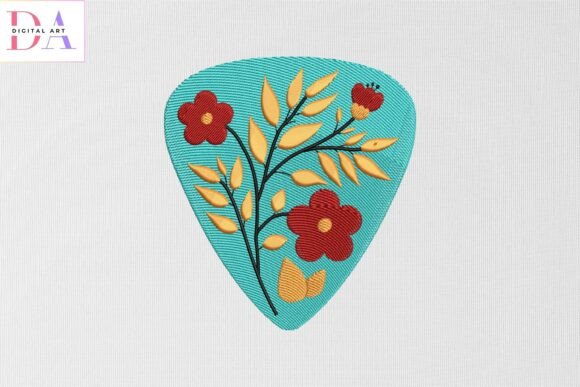
Colorful Floral Garden is a natural fit for custom apparel like sweatshirts and lightweight tees—especially when placed on the chest or sleeve. Its open layout avoids heavy density in one spot, so it lies flat and drapes nicely. On baby embroidery? Yes—soft blues and purples read gently against ivory onesies, and the leafy stems add subtle rhythm without overwhelming tiny garments. As an embroidered patch? Absolutely. Trim the excess and it holds up beautifully on denim jackets or canvas backpacks.
But here’s where attention matters: on stretchy fabrics like knits or thin cotton voile, I’d recommend light cutaway stabilizer underneath *and* topping with water-soluble film—those delicate leaf tips can waver if the fabric shifts mid-stitch. On dark fabric, test your thread colors first. The purple and blue tones may mute unless you use high-contrast threads (e.g., royal over navy). And on curved surfaces—like caps or rounded pillow covers—reposition the design toward the flatter center panel. The outer edges of the bouquet have fine stem details that could distort near seams or curves.
What It Does for Your Craft Business
If you’re an Etsy seller or digital embroidery file creator, Colorful Floral Garden is quietly versatile. It’s not a trend-chasing motif—it’s timeless enough for holiday embroidery (think Easter brunch napkins or Mother’s Day tea towels) and fresh enough for summer weddings or nursery decor. I’ve used it in printable mockups for client pitches, and it consistently elevates perceived value: customers associate thoughtful floral composition with care and craftsmanship. That translates directly to trust—especially for personalized gifts or handmade product lines where buyers pay a premium for intentionality.
For apparel decorators, this design scales well. Enlarge it thoughtfully for a back-embroidery sweatshirt (keep an eye on stitch density—don’t push beyond 4.5" without checking pull compensation), or shrink it down to 2.75" for a delicate cap front. Just remember: smaller versions demand sharper digitizing. If your file doesn’t hold crispness below 3", it’s worth reaching out to the seller before listing it as a commercial embroidery option.
Designer Notes You’ll Actually Use
- Always stitch a test on scrap fabric matching your final project’s weight and texture—linen behaves differently than cotton poplin, and both react uniquely to the same stabilizer.
- Check thread color contrast in natural light—not just under your machine lamp. Those yellow petals need brightness against cream or gray, not just theoretical RGB values.
- Review stitch density in your embroidery software. Look for overlapping fills or tight satin columns near flower centers—these can cause puckering on lightweight fabric.
- Confirm hoop size before hooping. This design fits comfortably in a 5" hoop, but if you’re using a 4" frame, verify whether stems or outer blooms get clipped.
- Inspect small details at 200% zoom: are leaf veins readable? Do petal edges taper smoothly? Blurry corners suggest poor digitizing—fine for craft fairs, less ideal for premium branding.
- Test black-and-white mockups. If the design loses its personality in grayscale, it may rely too heavily on color contrast rather than form—riskier for monochrome product lines.
- Compare light and dark backgrounds. A design that sings on ivory might disappear on charcoal unless thread choices are adjusted.
- Use proper stabilizer—not just “some.” For structured items like aprons or kitchen towels, medium-weight cutaway prevents shifting during repeated washing.
- Verify licensing before selling finished items or bundling Colorful Floral Garden into digital embroidery collections. Commercial use rights aren’t automatic—even for designs labeled “for personal and small business use.”
Final Thought: Not Just Another Bouquet
Colorful Floral Garden stands apart because it feels designed *for use*, not just display. It’s the kind of embroidery file I keep in my “go-to spring rotation”—not because it’s flashy, but because it stitches predictably, photographs well, and resonates emotionally. Whether you’re stitching a one-of-a-kind baby blanket, building a cohesive line of embroidered kitchen towels, or creating digital design assets for other makers, this bouquet earns its place—not as filler, but as a quiet anchor of warmth and seasonal clarity. In a crowded field of floral embroidery, that’s not just nice. It’s necessary.