Faux Embroidery Floral Bunny PNG
A Thoughtful First Impression for Real Embroidery Projects
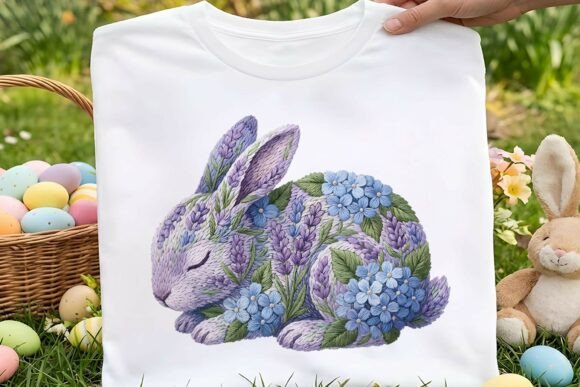
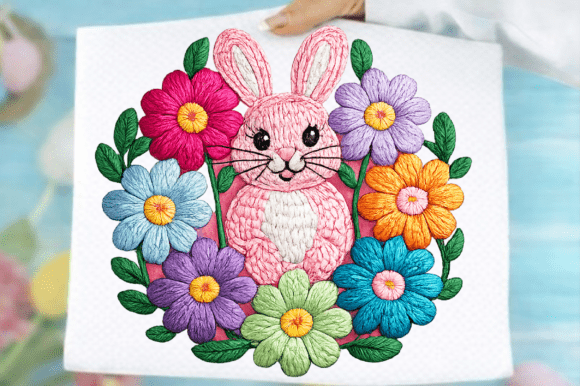
As an embroidery designer who’s stitched hundreds of custom orders—from baby blankets to boutique aprons—I opened the Faux Embroidery Floral Bunny PNG with quiet curiosity. Not as a quick download-and-stitch, but as a potential design asset for a client’s spring-themed nursery collection. Visually, it’s soft and whimsical: a bunny nestled among delicate florals, rendered with subtle texture that mimics satin stitch sheen and gentle fill stitch depth—even though it’s a flat PNG. There’s no harsh line work or cartoonish simplification; instead, it carries the warmth and intentionality of hand-drawn illustration, with layered petals and fine stem details that suggest dimension without overcomplicating the silhouette. It feels like a bridge between illustration and embroidery—a “faux” that invites translation, not replacement.
Where This Design Naturally Fits in Your Workflow
The Faux Embroidery Floral Bunny PNG doesn’t shout for attention—it invites thoughtful placement. I immediately pictured it on organic cotton kitchen towels (centered above a hem), linen pillow covers (as a single focal motif), and unisex baby blankets (paired with tonal thread for quiet elegance). Its scale and balance make it ideal for medium-to-small hoop sizes—think 4×4 or 5×5 inches—without sacrificing legibility. Unlike dense floral motifs that overwhelm small areas, this bunny retains charm at 3.5 inches tall, especially when paired with clean negative space. As an Illustrations asset, it works beautifully as a printable mockup base for Etsy listings or craft fair signage. As a Graphics file, it’s also well-suited for hybrid projects: traceable outlines for hand embroidery, or vector conversion groundwork for digitizing into a true machine embroidery design.
Real-World Performance: What Holds Up (and What Needs Care)
In practice, the Faux Embroidery Floral Bunny PNG shines brightest when treated as a *starting point*—not a finished stitch file. Because it’s a transparent PNG—not an embroidery file—it requires digitizing before machine use. That said, its high-resolution quality makes tracing and path creation significantly smoother than low-DPI clipart. I tested a rough digitized version on a lightweight cotton tote: satin stitch petals held shape well, while the bunny’s ear contours translated cleanly into smooth curves. On stretchy fabric like a crewneck sweatshirt, I added light tear-away stabilizer beneath mid-weight cutaway—critical for keeping those fine floral stems from puckering. On dark fabric, contrast became essential: I swapped default pastel thread palettes for heathered ecru and sage green to preserve the design’s gentle mood without losing definition.
For curved surfaces—like structured caps—the bunny’s compact proportions worked in my favor. No sprawling vines or wide wings to fight the crown’s contour. And because the original PNG avoids micro-details (no tiny stamens or ultra-thin veining), there’s less risk of fragile stitches breaking during washing or wear. That’s vital for baby items or kitchen towels that face frequent laundering. Still, I always recommend stitching a test swatch first—especially to check how fill stitch density interacts with your chosen stabilizer and fabric weight.
Impact on Your Handmade Brand and Customer Experience
This isn’t just about stitching—it’s about perception. The Faux Embroidery Floral Bunny PNG elevates handmade presentation because it reads as intentional, not generic. Customers browsing your Etsy shop notice the difference between mass-produced clipart and a thoughtfully curated motif like this one. When used consistently across product lines—say, on matching aprons, tea towels, and pillow covers—it strengthens brand cohesion. For personalized gifts, it adds quiet storytelling: a floral bunny evokes springtime, gentleness, new beginnings—ideal for baby showers, Easter collections, or boutique nursery decor. In product photography, its balanced composition and soft contrast translate beautifully to natural light shots, reducing post-editing time and increasing shareability.
Practical Notes Before You Digitize or Print
- Always verify licensing: The product page confirms commercial use is allowed—but double-check Creative Fabrica’s current terms before selling finished embroidered goods.
- Test on scrap fabric matching your final substrate—especially for textured weaves or knit fabrics where stitch coverage can vary.
- Review thread color contrast on both light and dark fabric mockups before committing to a palette.
- Confirm hoop size compatibility early—this design scales gracefully, but avoid pushing below 2.75 inches without adjusting stitch angles or density.
- Use proper stabilizer: Light cutaway for stable wovens; fused tear-away + topping for napped or fuzzy fabrics.
- Inspect small details after stitching: Petal edges and bunny whiskers may need minor cleanup with sharp embroidery scissors.
Final Thoughts for Embroidery Designers and Creative Entrepreneurs
The Faux Embroidery Floral Bunny PNG won’t replace your core machine embroidery files—but it *complements* them powerfully. It’s the kind of design asset that saves time when you need a fresh, cohesive motif for a seasonal launch or a custom request that calls for something tender and botanical. For Etsy sellers building themed collections, it’s a versatile anchor. For apparel decorators adding subtle charm to kids’ wear, it’s a quiet differentiator. And for small business owners balancing handmade integrity with scalable production, it offers flexibility without compromising aesthetic values. Just remember: its strength lies in how you interpret it—not how it arrives. Treat it with care in digitizing, respect in execution, and intention in placement—and it’ll earn its place in your most cherished handmade products.