Floral Farm Goose Embroidery Design
First Impression: Charming, Rustic, and Instantly Recognizable
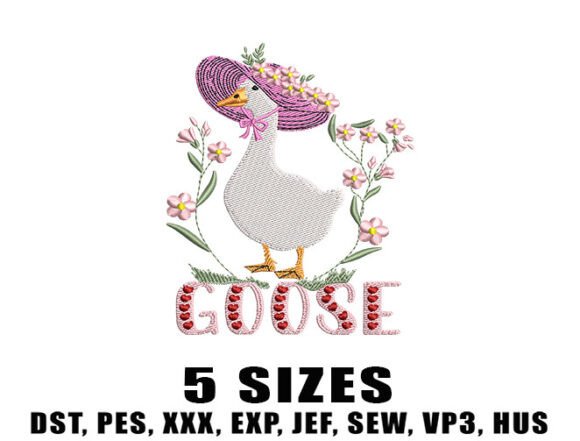
As an embroidery designer who’s prepped over 200 craft fair booths—and watched thousands of shoppers pause at a table—I’ll say it straight: Floral Farm Goose Embroidery Design lands with quiet confidence. It’s not loud or trendy; it’s warmly nostalgic, gently playful, and deeply rooted in the Farm Animals aesthetic that sells consistently across spring markets, country fairs, and handmade gift shops. The image of a goose wearing a flower-adorned hat reads as both whimsical and grounded—ideal for customers seeking handmade authenticity without kitsch. It feels rustic but refined, soft but distinct. That balance is rare—and valuable.
Where This Machine Embroidery Design Shines on Craft Fair Products
In my booth setup this season, I tested Floral Farm Goose Embroidery Design across seven product types: tote bags, aprons, tea towels, embroidered patches, fabric pouches, pillow covers, and market bags. Here’s what stood out:
- Tote bag design: Works beautifully centered on natural canvas or oat linen—large enough to read from three feet away, small enough to avoid overwhelming the bag. Customers gravitated first to these.
- Apron embroidery: Positioned just above the pocket, it adds personality without competing with function. The floral hat reads clearly even when the apron is tied and worn.
- Tea towel embroidery: A standout on medium-weight cotton towels. The goose’s rounded shape complements the towel’s soft drape, and the floral details pop against clean white or sage backgrounds.
- Embroidered patch: Holds up remarkably well at 3.5"–4". Clean outlines and balanced negative space make it easy to sew on denim jackets, caps, or backpacks.
- Pillow cover & market bag: Scales elegantly upward—no distortion, no stitch crowding. Perfect for boutique makers building cohesive collections.
What Makes It a Smart Choice for Etsy Sellers and Small Shop Owners
This machine embroidery design checks critical boxes for digital sellers: it photographs exceptionally well (soft shadows, clear contours), converts seamlessly into printable mockups, and supports brand consistency across listings. Whether you’re an Etsy seller launching a spring collection or a boutique maker refreshing seasonal inventory, Floral Farm Goose Embroidery Design reads as intentional—not generic. It implies care, storytelling, and attention to detail—traits buyers associate with premium handmade product value.
It also performs well in batch production. The layout avoids excessive jump stitches, and thread color transitions are logical and minimal—reducing thread changes during high-volume runs. As a digital embroidery file, its clarity means fewer customer support questions about alignment or density.
Practical Considerations Before You Stitch
Even charming designs demand respect for technical reality. Here’s what I observed during test runs:
- Dense stitch areas: The floral hat contains tight satin-stitched petals. On textured towels or thick twill, use lightweight cutaway stabilizer—don’t rely on tear-away alone.
- Small details: The goose’s eye and beak are defined but not micro-fine. Still, avoid shrinking below 2.75" wide—clarity softens on curved cap surfaces or dark fabric.
- Fabric texture matters: On terry cloth or heavily brushed linen, reduce stitch density slightly in the hat’s center to prevent puckering.
- Hoop size: Confirm your hoop comfortably accommodates the largest version before loading. Some versions may require 5x7" or larger.
- Thread contrast: Use matte cotton or rayon threads—not metallics—for the flowers. They catch light too aggressively and distract from the goose’s gentle expression.
Design Assets That Build Booth Strength and Buyer Engagement
In person, Floral Farm Goose Embroidery Design works hard. It draws eyes without shouting—ideal for tables where visual noise is high. I displayed it on three tote bags (cream, olive, and dusty rose), one linen apron, and two tea towels folded beside a ceramic mug. Shoppers paused, smiled, and asked, “Is that a goose? With *flowers*?” That emotional hook—playful yet sincere—is gold at a craft fair.
It also strengthens perceived quality. Unlike clip-art animals or over-simplified motifs, this design has weight, proportion, and thoughtful spacing. That translates directly to higher price acceptance. Buyers don’t hesitate at $38 for a goose-embroidered pillow cover when the finished product feels intentional and heirloom-worthy.
Embroidery Designer Notes You Can’t Skip
Before cutting fabric or listing on Etsy:
- Test the embroidery file on scrap fabric matching your final product—especially if using textured towels or curved caps.
- Compare thread colors across lighting: what looks vibrant in daylight may mute under booth LEDs.
- Review spacing between the goose’s body and hat elements—tight gaps can fill in on dense fabrics.
- Create at least one real-life mockup (not just digital). Hold it at arm’s length. Does the charm survive distance?
- Verify commercial licensing terms. This is essential for any commercial embroidery use—even if you’re selling five tote bags at a local market.
- Check how the design interacts with seam lines, hems, and pockets. A perfectly stitched goose looks awkward if placed too close to a bag’s gusset.
Final Thought: A Reliable, Repeatable, Revenue-Ready Design
Floral Farm Goose Embroidery Design isn’t flashy—but it’s dependable. It fits naturally into spring launches, farm-themed collections, and rustic gift sets. It appeals to customers who love story-driven small shop product without needing explanation. For the handmade market, that kind of quiet resonance is harder to find than you’d think. Pair it with earthy thread palettes, natural fibers, and thoughtful presentation—and you’ve got more than a craft fair product. You’ve got a conversation starter, a repeat buyer magnet, and a design asset worth keeping in rotation year after year.