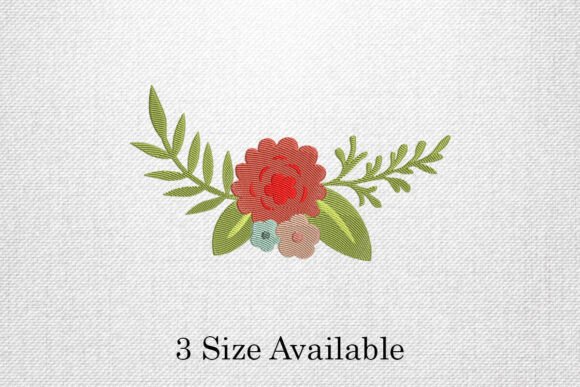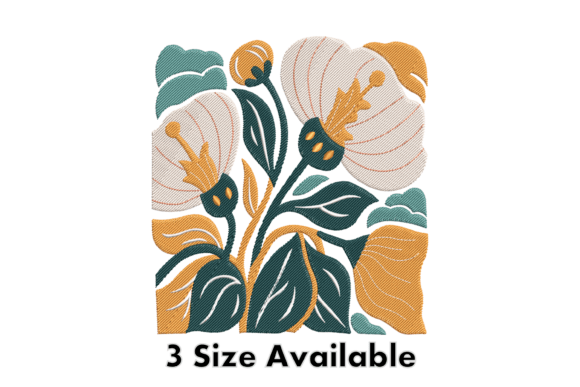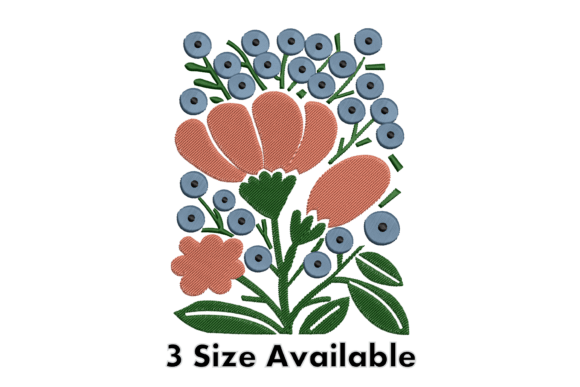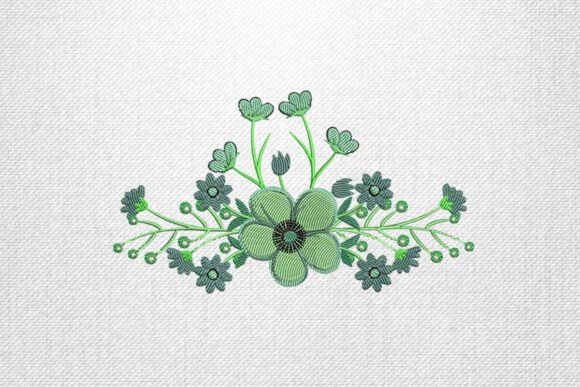
Green Floral Bouquet Embroidery Design
A Craft Fair Designer’s Real-World Review Before Booth Day
As someone who’s stitched, sold, and restocked over 200 craft fairs—and watched which embroidery designs stop shoppers mid-aisle—I opened the Green Floral Bouquet Embroidery Design file with quiet optimism. The title alone signals intention: “green” implies freshness and earthiness; “floral bouquet” suggests abundance without clutter; “elegant” (from the description) hints at refinement—not too whimsical, not overly rustic. It lands squarely in the elegant-farmhouse sweet spot: soft enough for tea towels, structured enough for tote bags, and versatile enough to feel intentional across multiple handmade product categories.
Where This Design Shines on Craft Fair Products
On a crowded table full of aprons, pouches, and pillow covers, the Green Floral Bouquet Embroidery Design stands out because it reads clearly at three feet—but rewards closer looking. Here’s how it performs across key craft fair staples:
- Tote bag design: Centered on a natural canvas or oat linen tote, it reads as polished and giftable—not crafty-casual. Customers associate this look with boutique quality, not DIY kits.
- Apron embroidery: Positioned just above the pocket, the bouquet balances utility and charm. Its vertical flow complements apron shape better than round motifs.
- Tea towel embroidery: Works beautifully on flour-sack cotton—especially when placed in the lower third. The green palette pops against cream or pale gray, and feels seasonal without being holiday-specific.
- Embroidered patch: At 3–4 inches wide, the bouquet holds detail well. Ideal for iron-on or sew-on use on denim jackets, market bags, or kids’ backpacks.
- Pillow cover & cushion embroidery: Scales elegantly to 5–6 inches. Looks custom—not mass-produced—especially when paired with textured linen or velvet.
- Caps & curved surfaces: Use caution here. The bouquet’s layered stems and petal clusters may distort slightly on high-crown caps unless digitized with curve compensation. Better suited for flat-front trucker caps or embroidered patches applied post-sew.
What Makes It Sell—And What Requires Care
The Green Floral Bouquet Embroidery Design succeeds where many floral machine embroidery designs fail: it avoids visual noise. No tiny filler stitches. No overlapping petals that blur into mud. Instead, clean outlines, intentional negative space, and balanced weight distribution make it instantly legible—even as a small accent on a fabric pouch or market bag tag.
That said, it’s not universally forgiving. As an embroidery designer, I always test first—and here’s what I’d flag:
- Dense stitch areas: Bouquets often pack density into center blooms. On thick fabrics (like duck canvas or quilted pouch linings), excess density can cause puckering. Reduce fill density by 5–10% if using heavier stabilizer—or switch to a lightweight cutaway for structure without stiffness.
- Fabric texture matters: On highly textured tea towels or burlap-look market bags, fine stem details may soften. Opt for slightly bolder outlines or simplify inner petal layers in your digitizing software before batch production.
- Dark fabric warning: Greens read beautifully on light neutrals—but on charcoal or navy, thread contrast drops. Test with lime, sage, and olive greens side-by-side. A single highlight thread (like pale gold or ivory) in the stamen area can lift the whole design.
- Small-size clarity: Below 2.5 inches, delicate leaves and thin stems risk losing definition. Reserve smaller versions (e.g., for zipper pulls or key fobs) for simplified derivatives—not the full bouquet.
Real Impact on Your Handmade Business
This isn’t just another digital embroidery file—it’s a brand amplifier. When customers see the Green Floral Bouquet Embroidery Design repeated across your tote bags, aprons, and pillow covers, they subconsciously register cohesion. That consistency builds trust. At a craft fair, where attention spans are short and comparisons are instant, that perceived professionalism converts browsers into buyers.
For Etsy sellers and small shop owners, this design strengthens listings. It photographs cleanly—no glare-prone metallic threads, no fuzzy edges—and pairs naturally with printable mockups showing lifestyle context (e.g., a linen tote beside fresh herbs, a tea towel draped over a ceramic mug). That visual storytelling lifts conversion rates far more than generic “handmade” tags.
And yes—it’s repeatable. Unlike intricate monograms or word-based designs, a botanical motif like this invites variation: change thread colors per season (mint + clay for spring, olive + rust for fall), rotate orientation, or combine with simple border stitches. That flexibility supports batch production without sacrificing uniqueness.
Essential Designer Notes Before You Stitch
Before cutting fabric or loading hoops, do these six things:
- Test on scrap fabric that matches your final product—same weight, same weave, same pre-wash status.
- Check thread contrast under both daylight and booth lighting. Greens shift dramatically under warm LED vs. natural light.
- Review spacing and alignment—especially if pairing with text (e.g., “Gather & Grow” on an apron). Does the bouquet leave breathing room?
- Confirm hoop size compatibility with your most-used frames. If it pushes 5x7”, consider whether your busiest products (like tea towels) fit comfortably.
- Inspect stitch density in petal centers and leaf clusters. Trim any unnecessary underlay or excessive run stitches.
- Use the right stabilizer: tear-away for smooth cottons, cutaway for knits or stretchy pouch fabrics, and fusible for lightweight linens prone to shifting.
Finally—always create at least one real mockup before fair day. Drape that embroidered tote over your arm. Pin the patch to a cap. Hold the pillow cover up beside your booth signage. Does it feel like your brand? Does it hold up under fair lighting? Does it invite touch? If yes—you’ve got a winner.
And one last note: confirm commercial licensing terms before selling finished products. As a digital embroidery file, the Green Floral Bouquet Embroidery Design falls under Single Flowers and Embroidery categories—but your right to sell physical goods depends entirely on the license attached to your purchase. When in doubt, contact the designer directly. Clarity now prevents returns, reviews, or takedowns later.
Bottom line? The Green Floral Bouquet Embroidery Design isn’t flashy—but it’s quietly confident. It elevates a simple tote into a keepsake, turns a kitchen staple into a statement piece, and gives your craft fair booth the calm, curated energy that draws people in—and keeps them coming back.