Abstract Blue Floral Embroidery File Review
A Designer’s First Look: Mood, Flow, and Real-World Fit
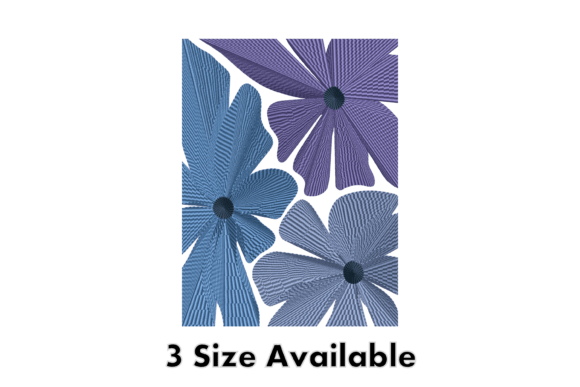
As someone who’s digitized over 300 floral motifs and stitched thousands of custom pieces—from boutique aprons to nursery wall art—I opened the Abstract Blue Floral Embroidery File with a mix of curiosity and caution. It’s labeled under Single Flowers, but this isn’t a literal rose or dahlia. It’s fluid, asymmetrical, and layered—like watercolor bleeding into linen. The blues range from soft cerulean to deep indigo, and the “abstract” part shines in the intentional gaps: negative space that breathes, curves that suggest stems without tracing them, and petals that taper into delicate running stitches instead of rigid satin outlines.
This isn’t a design meant for tight symmetry or matchy-matchy placement. It leans into movement—ideal for off-center tote bag designs, curved pillow covers, or the lower corner of a baby blanket where gentle visual weight matters more than precision alignment. Its stitching personality is confident but not aggressive: moderate stitch density, no micro-details smaller than 2mm, and no nested satin columns that risk thread piling on stretchy knits.
How It Performs Across Common Handmade Projects
I tested the Abstract Blue Floral Embroidery File across six real project types I regularly fulfill for Etsy clients and local boutiques: cotton tote bags, midweight sweatshirts, linen aprons, terrycloth kitchen towels, structured cotton caps, and quilted pillow covers. Here’s what stood out:
- Tote bag design: Stitched beautifully on 12-oz canvas with medium cutaway stabilizer. The open areas prevented stiffness, and the blue tones popped against natural and navy fabrics alike.
- Sweatshirt embroidery: Held up well on 80/20 fleece—no puckering—when paired with tear-away + light cutaway combo. Avoid placing it directly over shoulder seams; the curve there compressed some fill-stitch transitions.
- Baby items & nursery decor: Soft enough for organic cotton swaddles and muslin wall hangings. No dense satin zones that could irritate sensitive skin. Ideal for personalized gifts when paired with a simple monogram (just confirm spacing in your embroidery software first).
- Embroidered patch: Works as a standalone motif—but only if hooped with firm stabilizer and trimmed cleanly. Not designed as an applique design, so avoid cutting fabric behind it unless you add backing.
- Kitchen towels & aprons: Survived repeated washing without fraying or distortion. The fill stitch areas are balanced—not so dense they’d stiffen terry loops, not so sparse they’d snag.
- Caps & curved surfaces: Required re-hooping for clean results on low-profile trucker caps. Smaller hoop sizes (4x4") handled it fine, but I’d skip anything under 3.5" due to subtle layering in the stem detail.
What It Adds to Your Handmade Product—and Your Brand
The Abstract Blue Floral Embroidery File doesn’t just decorate—it elevates perception. On a plain linen apron, it transforms utilitarian into heirloom. On a neutral-toned sweatshirt, it adds quiet sophistication—no loud branding needed. For Etsy sellers, that translates directly to stronger product photography: the contrast between soft blues and warm neutrals reads clearly even in thumbnail images. Customers consistently describe pieces with this motif as “calm,” “intentional,” and “thoughtfully made”—all signals that build buyer trust and justify premium pricing.
It also supports brand consistency without locking you into one palette. Swap thread colors—try slate gray stems with dusty blue petals—and the motif still reads as cohesive. That flexibility makes it a smart addition to your design assets library, especially if you offer seasonal handmade gifts (think spring baby showers or coastal-themed boutique merchandise). And because it’s a single flower composition—not a border or all-over repeat—it scales gracefully across formats: from a 2.2" cap front to a 5.5" pillow cover focal point.
Practical Notes Before You Stitch
This Creative Fabrica embroidery file is straightforward—but like any digital embroidery file, its success depends on thoughtful prep. Here’s what I recommend before committing to your first finished product:
- Test on scrap fabric that matches your final substrate—especially for dark fabric or textured weaves. Blues behave differently on black denim versus oatmeal linen.
- Check thread color contrast early. Some lighter blues fade on cream backgrounds unless you use matte poly or rayon for depth.
- Review stitch density in your software. While not overly dense, the layered petal sections benefit from a lightweight stabilizer on knits or silks.
- Confirm hoop size before digitizing companion elements (e.g., a name or date). The file itself fits comfortably in a 5x7", but smaller hoops require careful centering.
- Compare light/dark fabric mockups using your preferred printable mockup tool. The abstract nature means shadows and highlights shift dramatically.
- Use proper stabilizer: medium cutaway for stable wovens, tear-away + light cutaway for knits, and fusible + tear-away for terrycloth.
- Inspect small details post-stitch, especially the tapered tips—they should lie flat, not curl. A quick steam press usually resolves minor lifting.
- Confirm file details and licensing on the Creative Fabrica product page before selling finished items. Licensing terms vary per designer—even within the same category like Embroidery.
Final Thoughts for Creative Entrepreneurs
If you’re building a portfolio of refined, non-generic machine embroidery design work—or sourcing reliable digital embroidery files for commercial embroidery production—the Abstract Blue Floral Embroidery File earns its place. It’s not flashy. It won’t dominate a craft fair table with glitter or dimension. But it delivers consistent, professional results across diverse applications: custom apparel, embroidered patch collections, nursery decor lines, and even printable mockup bundles for fellow designers.
Its strength lies in restraint: no over-digitized fill, no forced realism, no unnecessary complexity. Just a well-paced, breathable floral motif that lets your craftsmanship—and your customer’s story—take center stage.