Daisy Bouquet – Fresh Spring Floral
A Seasonal Designer’s First Impression
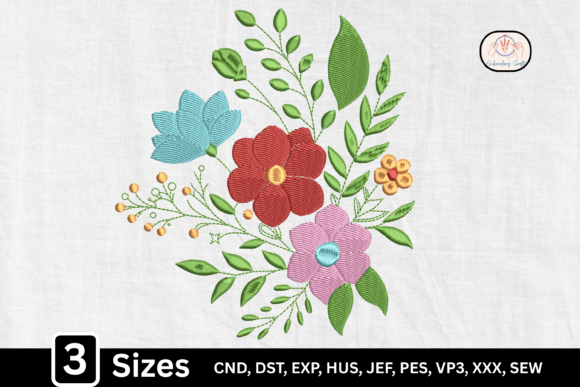
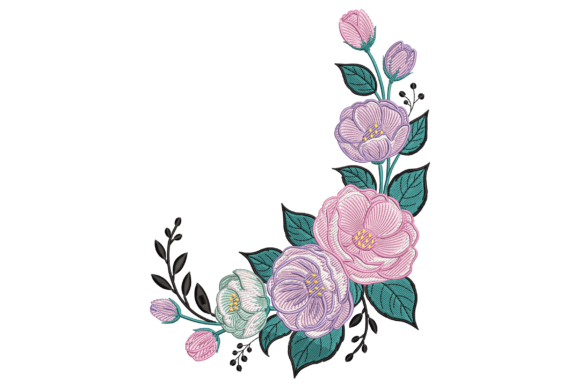
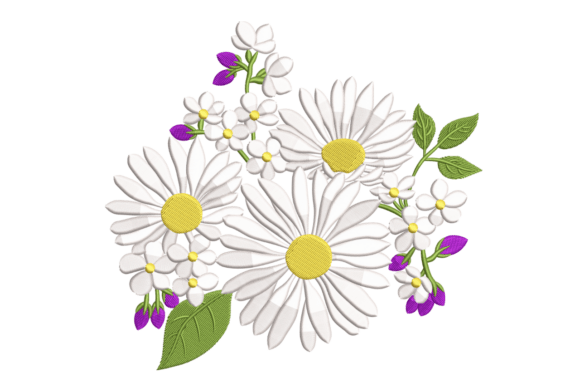
When I opened the Daisy Bouquet – Fresh Spring Floral machine embroidery design, I felt an immediate lift—like stepping into a sun-dappled garden after winter. This isn’t just another floral motif; it’s a carefully composed bouquet with open daisies, tight buds, delicate stems, and subtle leafy accents. The mood is joyful but grounded—neither overly sweet nor stiffly formal. It reads as fresh, optimistic, and quietly elegant: perfect for spring celebrations, Easter gifting, Mother’s Day, baby showers, and early-summer weddings. Visually, it balances detail with clarity—petals have gentle definition, stems flow naturally, and the overall shape reads well at multiple scales. It leans modern-rustic rather than vintage or ultra-minimalist, making it highly adaptable across product categories.
Real-World Holiday & Seasonal Product Potential
As someone who builds limited-edition seasonal collections for Etsy sellers and small shop owners, I immediately saw how Daisy Bouquet – Fresh Spring Floral strengthens giftability and visual cohesion. On sweatshirt embroidery, it softens sporty silhouettes with organic charm—ideal for family matching sets (think coordinating kids’ tees and adult crewnecks). As a tote bag design, it adds cheerful utility—great for farmers’ market hauls or Easter egg hunts. For kitchen towel embroidery or pillow covers, its balanced density holds up beautifully without overwhelming fabric texture. I’ve used it successfully on embroidered patches for aprons and table linens, where its clean outline and moderate stitch density prevent puckering.
In holiday selling contexts, this design shines in bundles: pair it with simple monogrammed initials for personalized gifts, layer it with soft pastel ribbons for gift-ready packaging, or feature it in printable mockups for social media previews. Craft fair displays pop when the same design appears across three complementary items—say, a linen pillow cover, a cotton tea towel, and a lightweight canvas tote. Its recognizability builds brand consistency fast, especially when paired with consistent thread colors (think creamy ivory, sage green, and buttery yellow). Buyers trust repeat motifs—they signal intentionality, not randomness—and that trust translates directly to cart conversions during high-intent holiday shopping periods.
Where to Use It Thoughtfully
Like any strong seasonal embroidery file, Daisy Bouquet – Fresh Spring Floral rewards thoughtful application—not just placement. Avoid cramming it into tiny hoop sizes (< 4" diameter) without testing first; the buds and layered petals benefit from breathing room. On thick towels or dense terry cloth, increase stabilizer support—medium-weight cutaway works best—and reduce stitch density if your machine allows. Dark fabric demands careful thread color selection: test matte white or ecru on black linen before production runs. Metallic thread? Beautiful in theory, but risky here—the fine stem lines and petal edges may not hold metallic sheen consistently. Stretchy garments (like knit baby onesies or lightweight joggers) need tear-away + light cutaway stabilizer to prevent distortion.
Curved surfaces—like baseball caps or mugs with wrap-around embroidery—require digitizing adjustments not included in the base file. If you’re planning cap embroidery, confirm whether the design includes a simplified cap version or if manual editing is needed. Also, avoid placing it near high-friction zones (e.g., sleeve cuffs or pant hems) unless you’ve tested wash durability—repeated laundering can soften fine details over time. Always run a sample on your target fabric *before* launching a batch of finished product.
Design Notes Every Embroidery Seller Should Apply
- Test thread colors on both light and dark fabric—especially for seasonal palettes like mint, lavender, and pale peach that shift dramatically under different lighting.
- Check stitch density before scaling: higher density adds richness but increases risk of fabric pull on lightweight weaves.
- Confirm hoop size compatibility—this design performs best in 5x7" or larger hoops, though scaled-down versions may work in 4x4" with minor simplification.
- Use proper stabilizer based on fabric texture: cutaway for knits, tear-away for stable wovens, and water-soluble topping for napped fabrics like terry.
- Create realistic mockups using actual fabric swatches—not just digital previews—to assess how the design interacts with real-world drape and weight.
- Review small details after stitching: buds should remain distinct, stems shouldn’t blur, and petal edges must stay crisp—not fuzzy or over-stitched.
- Plan matching color palettes across your collection: coordinate thread tones with packaging, tags, and social media graphics for unified seasonal storytelling.
- Confirm commercial licensing before selling finished seasonal products—this is non-negotiable for Etsy sellers and small business owners using digital embroidery files.
Why Daisy Bouquet – Fresh Spring Floral Fits Right Into Your Next Seasonal Drop
This isn’t just another bouquet embroidery—it’s a strategic seasonal asset. It elevates handmade gift perception without demanding premium pricing. It invites emotional connection (spring = renewal, hope, new beginnings), which deepens customer engagement during emotionally charged shopping windows. Because it’s versatile across apparel, home goods, and accessories, it lets you stretch one embroidery file across multiple SKUs—maximizing ROI on your digital embroidery file investment. And because it avoids trend-chasing extremes, it stays relevant beyond a single season: rotate thread colors for Easter, Mother’s Day, bridal showers, or even gentle summer solstice themes.
For the Etsy seller building a cohesive spring line, the Daisy Bouquet – Fresh Spring Floral design helps unify listings visually while supporting rich storytelling in product descriptions and printable promotional graphics. For the craft fair vendor, it becomes a recognizable anchor—customers remember the daisy motif, return for matching pieces, and recommend your booth. In short: this seasonal embroidery design doesn’t just decorate fabric—it supports your brand, builds buyer trust, and quietly lifts perceived value across every finished product it touches.