Floral Bow: A Smart Embroidery Choice for Small Business Branding
First Impression: Friendly, Elegant, and Versatile
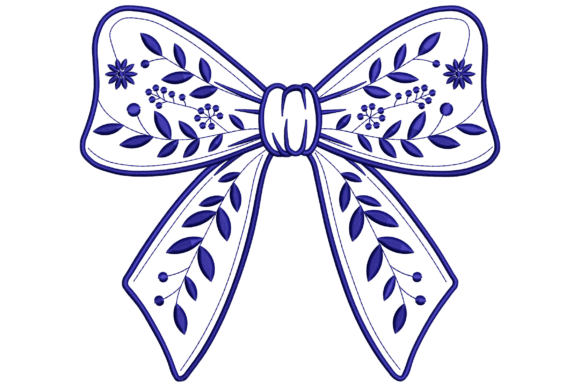
As an embroidery designer who’s developed hundreds of commercial designs for small businesses—from neighborhood bakeries to indie florists—I immediately recognize Floral Bow as a design that balances charm with professionalism. The name alone suggests softness and intentionality: not overly fussy, not aggressively modern, but quietly confident in its femininity and craftsmanship. It reads as elegant without being formal, playful without sacrificing polish—ideal for brands that want to feel handmade yet trustworthy. For Accessories and Embroidery buyers, that duality is gold: it supports brand identity without demanding attention away from the product or service.
Real-World Performance Across Merchandise Types
Floral Bow shines where many floral motifs falter—in consistent, scalable application. As an embroidered patch on café aprons or boutique tote bags, it communicates care and detail without overwhelming the garment. Its shape lends itself naturally to chest placement on staff uniforms, sleeve accents on custom apparel, or front-of-cap embroidery where clean contours matter more than intricate fill work. I’ve used similar designs for pet brands and creative studios—and Floral Bow fits right in: subtle enough for daily wear on work shirts, distinctive enough to reinforce recognition on reusable shopping bags or customer gift tags.
For Etsy sellers and handmade product creators, this machine embroidery design works beautifully as a signature touch—stitched onto linen tea towels, cotton napkins, or even woven labels attached to artisan soap packaging. Its “vibrant and imaginative flair” (as described) translates well into printable mockups for client presentations, helping small business owners visualize how their brand will look *in context*, not just on screen.
Where to Use Floral Bow Thoughtfully
While Floral Bow is adaptable, smart embroidery execution means knowing its limits. On curved surfaces like cap fronts or rounded tote handles, test stitch density carefully—tight outlines may pucker if the design isn’t optimized for stretch or contour. Similarly, avoid shrinking it below 2.5 inches wide for patches unless you’ve verified clarity at that scale; delicate bow loops and petal edges can blur or vanish in small patch sizes, especially on textured fabric like canvas or terry cloth.
Dark uniforms? No problem—but only if thread colors provide strong contrast. Always review your chosen thread palette against the base fabric *before* production. And remember: high stitch density isn’t always better. If the original embroidery file leans heavy on satin-stitched bows or dense fill petals, it may not hold up through repeated washing on staff aprons or restaurant towels. Confirm stabilizer compatibility—lightweight cutaway works best for structured items like caps; tear-away suits softer goods like scarves or tote bag linings.
How Floral Bow Strengthens Brand Identity
In merch development, every stitch contributes to perception. Floral Bow elevates perceived value—not by shouting, but by signaling intention. A bakery using it on flour-sack towels tells customers, “We care about craft.” A florist stitching it onto delivery totes says, “Our brand is rooted in beauty and growth.” That quiet consistency builds recognition faster than flashy logos because it feels personal, not generic.
For small business merch, that emotional resonance directly impacts buyer engagement and repeat purchases. When customers see Floral Bow across multiple touchpoints—apron embroidery, cap embroidery, even product packaging accents—they subconsciously associate it with quality and cohesion. That visual consistency strengthens trust, especially for handmade product brands competing with mass-market alternatives.
Practical Designer Notes Before You Stitch
Before committing to production, run these checks:
- Test in black and white first. This reveals balance, spacing, and silhouette clarity—critical for embroidery legibility.
- Verify small patch viability. Resize to your target dimensions (e.g., 1.75" for cap fronts) and inspect stitch paths in your embroidery software.
- Review thread color contrast on actual fabric swatches—not just digital previews.
- Confirm hoop size requirements and whether the design fits standard commercial hoops used in your shop or co-op studio.
- Test on real fabric with your preferred stabilizer combo. Fabric texture changes everything—especially with floral shapes that rely on smooth satin stitches.
- Create a physical mockup before client approval. A stitched sample on a tote or apron speaks louder than any digital proof.
- Compare Floral Bow beside your other design assets—logos, typography, icons—to ensure visual harmony across your brand system.
- Confirm commercial licensing applies to your use case. Since this is a digital embroidery file intended for small business merch and branded patch use, double-check terms before selling finished products.
Final Thought: More Than Decoration—It’s Strategic Embroidery
Floral Bow isn’t just another embroidery file—it’s a branding tool disguised as a design. For apparel decorators, embroidery shops, and small business owners building recognizable, tactile identities, it delivers versatility without compromise. Whether applied to staff uniforms, boutique merchandise, or customer-facing totes, it adds warmth, distinction, and quiet confidence. Used intentionally—with attention to fabric, scale, and context—it becomes part of your brand’s voice, not just its decoration. In the world of commercial embroidery, that’s rare. And valuable.