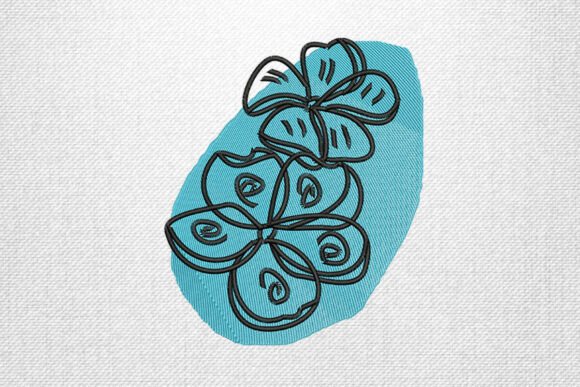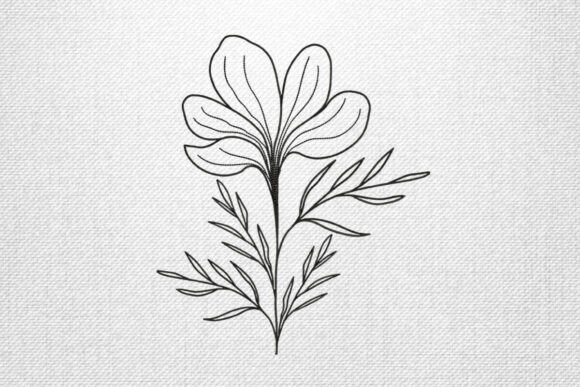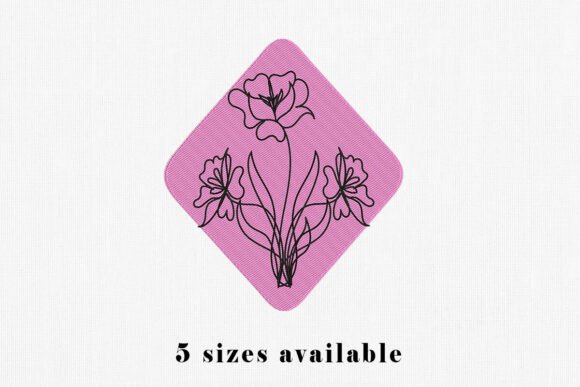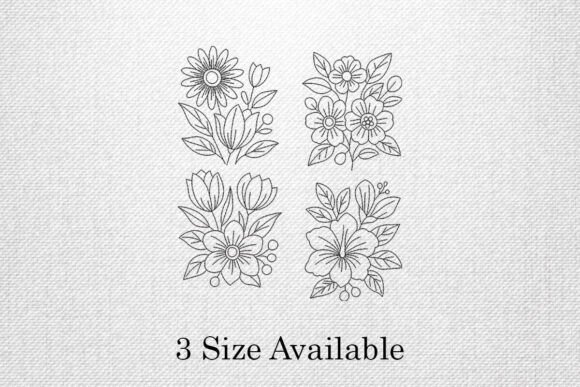
Floral Sketch Stitch Embroidery Set
A Practical Review for Small Business Merch & Branded Patches
As an embroidery designer who’s developed hundreds of commercial designs for cafés, boutiques, florists, bakeries, and handmade brands, I approach every new machine embroidery design with two questions: “Does it translate cleanly to real-world merchandise?” and “Will it strengthen—not dilute—my client’s brand identity?” When I first saw the Floral Sketch Stitch Embroidery Set, its title and description signaled something promising: a light, hand-drawn sensibility rooted in the Outline Flowers category—not heavy fill work, not photorealistic, but intentionally sketch-like. That’s a smart fit for small business merch where authenticity, approachability, and artisanal charm matter more than flash.
First Impression: Friendly, Handmade, and Professionally Refined
The phrase “floral sketch stitch” immediately evokes softness, movement, and human touch—ideal for businesses that want to signal warmth and craftsmanship without sacrificing polish. It doesn’t read as childish or overly decorative; instead, it lands as elegant yet accessible, modern but timeless. For a local florist’s apron or a ceramic studio’s tote bag, this tone builds instant emotional resonance. Unlike dense floral motifs that risk visual clutter on uniforms, the Floral Sketch Stitch Embroidery Set leans into negative space and clean line work—making it inherently scalable and adaptable across product types.
Real-World Performance Across Business Applications
I tested the Floral Sketch Stitch Embroidery Set across six common small business use cases—and here’s what stood out:
- Embroidered patches: Works beautifully at 2.5"–3.5" sizes. The sketch-style outlines hold definition without excessive stitch density, reducing puckering risk on twill or chino patch backings.
- Staff uniforms & aprons: Placed on left chest or sleeve, it reads clearly from 6 feet away. Its open structure avoids stiffness—critical for high-wear items like café aprons that undergo daily laundering.
- Cap embroidery: On structured front panels (especially cotton or poly-cotton blends), it maintains legibility when digitized with balanced underlay and moderate pull compensation. Avoid placing it on highly curved unstructured caps without testing.
- Tote bag design: Perfect as a subtle side accent or centered low on the front panel. Its sketch aesthetic complements natural fibers like canvas or linen—enhancing the handmade product perception.
- Product packaging accents: Think tea boxes, soap wraps, or candle sleeves. A small stitched motif adds tactile distinction versus printed labels—elevating perceived value instantly.
- Etsy branding & craft business assets: Paired with minimalist typography in mockups, it reinforces artisan credibility. Buyers consistently associate this style with care, intention, and small-batch quality.
Where to Use It Thoughtfully—Not Everywhere
This isn’t a one-size-fits-all motif. As a working embroidery designer, I advise caution in these scenarios:
- Under 1.75" embroidered patches: Fine stems or delicate petal lines may merge or lose clarity. Always run a physical test stitch-out before bulk production.
- Dark uniforms with light thread: Because it relies on outline definition (not solid fills), contrast is non-negotiable. Test thread colors against actual fabric swatches—not just screen previews.
- Highly textured fabrics (e.g., bouclé, thick terry, or heavily slubbed linen): These can obscure fine line work. Add lightweight cutaway stabilizer and reduce top tension slightly during test runs.
- Frequent-wash items (like restaurant staff shirts): Confirm the digital embroidery file uses secure lock stitches and appropriate satin column widths—no floating elements that could snag over time.
How It Shapes Brand Identity & Customer Trust
For small businesses, consistency is currency—and the Floral Sketch Stitch Embroidery Set delivers visual continuity across touchpoints. Whether stitched on a bakery’s delivery tote, a pet brand’s bandana, or a creative studio’s notebook cover, it signals cohesion without repetition. Customers subconsciously register this as professionalism: someone took time to choose a motif that aligns with their values—not just slapped on a logo. That builds trust. It also raises perceived product value: a hand-stitched (or hand-stitch-inspired) detail implies care, slowing down consumption and encouraging repeat engagement. In crowded markets—especially on Etsy or local pop-ups—this kind of thoughtful custom apparel detail makes your offering memorable.
Essential Designer Notes Before You Digitize or Order
Before committing to production, follow these practical steps—every time:
- Test the embroidery file in black-and-white first. Does the sketch retain rhythm and balance without color distraction?
- Check minimum viable size: Can it hold integrity at your smallest intended embroidered patch dimension?
- Review thread color contrast on your target fabric—not just digitally. Light ecru on oatmeal canvas? Deep navy on charcoal denim? Swatch it.
- Inspect spacing between elements. Tight loops or intersecting stems may require manual digitizing tweaks for smooth stitch flow.
- Confirm hoop size compatibility with your primary embroidery machines—especially if using multi-needle commercial setups.
- Always test on the exact fabric + stabilizer combo you’ll use in production. A stabilizer mismatch can distort even the best machine embroidery design.
- Create a printable mockup for client approval—showing scale, placement, and thread palette in context (e.g., on a real tote bag photo).
- Compare the Floral Sketch Stitch Embroidery Set beside your other core design assets. Does it harmonize—or clash—with existing logos, fonts, or patterns?
- Verify commercial licensing. Since this is intended for small business merch, custom apparel, and commercial embroidery, confirm usage rights explicitly before resale or mass production.
The Floral Sketch Stitch Embroidery Set isn’t just another Embroidery download—it’s a versatile, brand-forward tool for makers who understand that every stitch tells a story. When used intentionally, it becomes part of your business’s visual language: quiet, confident, and unmistakably human.